Gas Line Installation & Repair
Pipe gas to a range, dryer, grill, fire feature or generator, or fix a leaking line.
Plumbing a new building happens in phases: buried lines before the slab or foundation, rough-in within the framed walls, and fixtures at the end, with an inspection after each.
Tell the dispatcher which phase you are in and what you are building.
 Serving Commerce City, CO
Ask what the visit covers before you approve any work.
Before a slab or basement floor is poured, the plumber sets drain lines, sleeves and any buried supply pipe. The layout must match the plans exactly, because moving a pipe after the pour means cutting concrete.
An inspector checks the work before it is covered. Keep the trenches open and clear until the inspector signs off.
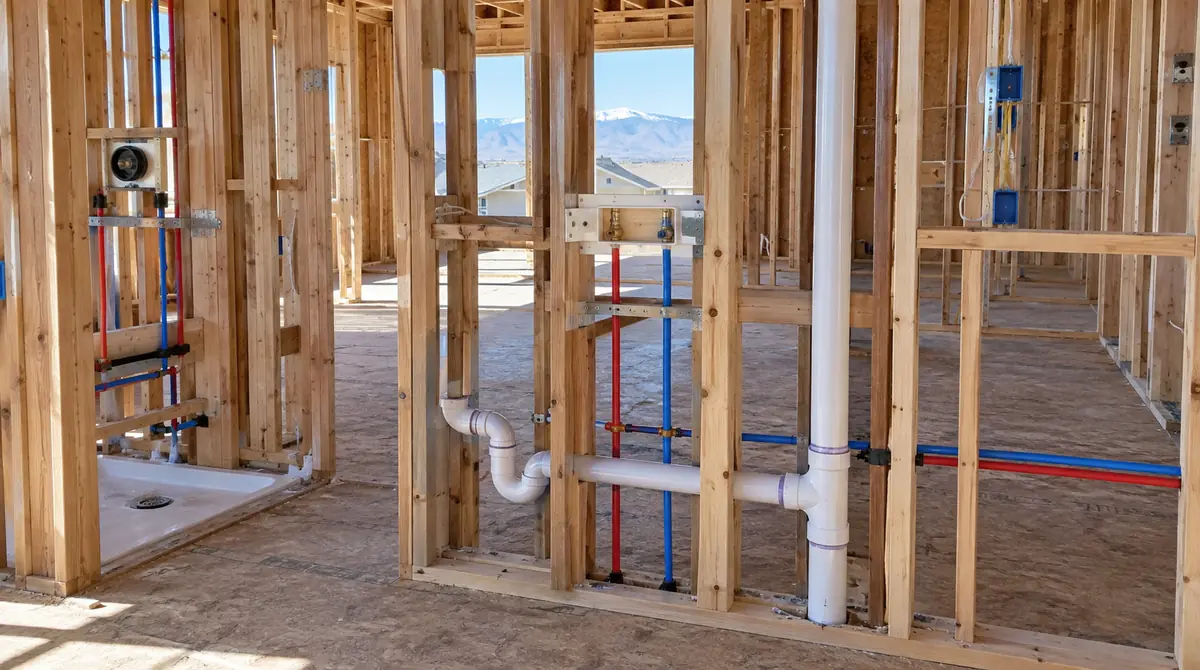
After framing, the plumber routes supply and drain pipes through the walls and floors, sets the tub and shower valves, installs the vents and pressure tests everything. Inspection comes before the walls are closed up.
This is the time to confirm fixture locations, backing for grab bars and cabinets, and the path of every pipe.
Commerce City grew by about 36 percent between the 2010 and 2020 censuses, reaching 62,418 residents, so new construction is a regular part of the picture. The Colorado Geological Survey notes that expansive clay under Front Range communities can disrupt pipelines and sewer lines, which is a reason for flexible joints and careful bedding.
The local building office issues plumbing permits, and the licensed contractor normally pulls them and books the inspections.
Pricing for a new build depends on the plan and specification.
Compare bids on the same plan with the same fixture list.
After drywall, paint and flooring, the plumber sets toilets, sinks, faucets, the water heater and appliances. Final connections get tested, and a last inspection signs off the plumbing.
Keep fixtures in their boxes until the finish stage, and check them for damage before installation.
A plumber works with the builder, the framer, the electrician and the mechanical contractor. Delays in one trade ripple through the others. Ask about scheduling and who coordinates inspections.
On an addition, tying into existing lines needs care. Shut off the water, find the connection points and plan for any code upgrades.
Ask which materials will be used for supply and drain pipe, who pulls the permit, how many inspections are expected and what the warranty covers. Ask whether the price includes fixtures or only labor.
Ask also about water pressure, the placement of the main shutoff and hose bibs that resist freezing.
A new house gets a pressure reducing valve at the main, an expansion tank where required, and shutoff valves at each fixture. Outdoor spigots should be frost-proof.
Plan for the number of bathrooms, the size of the water heater and the pipe diameter so that two showers can run together without a pressure drop.
New builds and additions follow a sequence, and each stage has its own inspection.
Drain and sewer lines go in before the concrete is poured. Mistakes here are costly, so plans and locations are confirmed first.
Supply and drain lines are run inside framed walls and floors. The plumber sets valves, vents and stub-outs.
Fixtures, faucets and appliances are connected after the walls are finished. See water heater installation.
Pipe gas to a range, dryer, grill, fire feature or generator, or fix a leaking line.
Swap out a worn tank for a unit sized for your household, fuel and space.
Install a new shower, tub or valve with the drain set at the right height.
Three times: underground before the pour, rough-in after framing and finish near the end.
Usually the licensed plumbing contractor. Confirm in the contract.
Yes. The plumber connects new lines to the existing system and may need to upgrade parts of it.
It can help protect a lower level from a sewer backup. A plumber can advise whether it suits your lot.
Someone answers at all hours. Rough-in and finish work follows the builder's schedule, yet a burst pipe or a leak at a job site can be reported whenever it happens.
Yes, from underground lines through rough-in and finish. Share the plans or the scope so the dispatcher can match the right contractor.
Typically. Underground, rough-in and final each need approval. Ask who schedules them.
Phone in and describe the project and its phase so a local contractor can talk it through.
Service area centered on Commerce City and nearby Adams County cities.