Burst Pipe Repair
Shut off the flood, then replace the split or cracked section of pipe.
Every hour that water sits in a building, more of it soaks into drywall, framing and flooring. Restoration is its own trade, separate from the plumber who fixes the pipe: pull the water out, dry what can be saved and rebuild what cannot.
This page uses its own restoration phone line, so call that number for water damage.
 Serving Commerce City, CO
Ask what the visit covers before you approve any work.
Find the source and stop it if you safely can. For a pipe, that means the main valve. For floodwater or a flooded basement, keep out of the room if outlets, cords or the panel are near the water, and leave power shutoff to the utility or an electrician.
Take photos and short videos of every affected room before anything moves. Pick up rugs, books and electronics, prop furniture up on blocks and open interior doors so air can move. Then phone the restoration line and describe where the water came from and how deep it is.
Restoration companies sort water into three categories under the IICRC S500 standard. Category 1 is clean, such as a supply line or a tub overflow. Category 2 carries some contamination, for example washing machine or dishwasher discharge. Category 3 is grossly contaminated and includes sewage and rising floodwater.
The category sets the plan. Clean water that is caught fast can often be dried in place. Sewage-contaminated drywall, carpet and padding are normally cut out and discarded. Ask the crew lead which category they assigned and why, and whether the job follows S500.
Pricing follows how much water there is, what kind it is and how long drying takes, and an insurer is often involved.
Request a written scope before work starts, and ask whether the company will coordinate with your adjuster.
Front Range water losses often start with a frozen supply line, a failed water heater or a sewer backup into a lower level. Heavy rain can also push water into window wells and basement entries.
Floodwater and sewage are normally treated as contaminated. Check whether your homeowner policy covers the loss, since flood damage often calls for a separate policy, and call your insurer early.
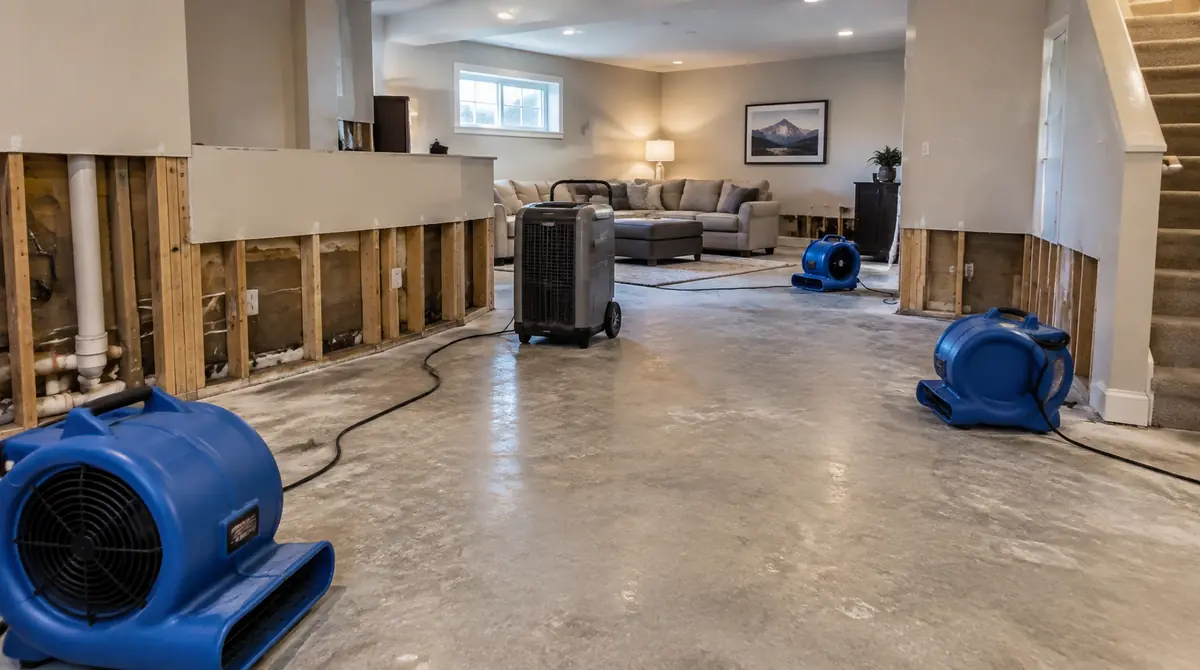
Crews begin by extracting standing water with pumps and wet vacuums. Then they place air movers and dehumidifiers, which pull moisture out of materials and the air together. Moisture meters take readings in walls, subfloors and framing, and the same spots are measured again each visit.
Drying is finished when readings fall to the dry standard for that material, not when the surface feels dry. Thermal cameras help locate damp areas behind tile or cabinets. Soaked insulation, padding and swollen drywall are generally removed because they dry too slowly to save.
Finished basements are common in Commerce City homes, and water gathers there first, soaking carpet, padding, drywall and boxes in storage. With a flooded basement, avoid the stairs if water is close to outlets or the panel, and leave power off until a professional clears the space.
A frozen pipe can split inside a wall during a hard cold snap and release water when it thaws. Denver's average first freeze falls on October 7, so the risk starts early in the fall. Closing the main valve as soon as you spot a split limits the loss.
The EPA reports that mold can begin growing on wet materials within 24 to 48 hours, so quick drying is the best prevention. If growth is already visible, ask the crew how they would contain and remove it.
Rebuilding means new drywall, insulation, trim, flooring and paint. Some companies handle that work, and others stop after drying, so find out which you are getting. A plumber is a separate call: someone still has to repair the pipe or appliance that caused the loss.
Tell your insurer about the loss soon and ask what documents it wants, commonly photos, a list of ruined belongings and a written scope. Save receipts for urgent work like extraction and temporary fixes. Keep damaged items until the adjuster signs off, unless they threaten anyone's health.
Request daily moisture logs and a written scope from the restoration company. Adjusters often ask for them, and documented readings plus equipment days help the claim move faster.
Shut off the flood, then replace the split or cracked section of pipe.
Pinpoint a hidden leak using acoustic listening, thermal imaging and pressure tests.
Troubleshoot cold showers, leaks, rumbling and pilot or element failures.
Right away. Mold may begin growing on wet materials within 24 to 48 hours.
If a pipe, fixture or appliance caused the water, yes. The restoration crew dries the building, and the plumber fixes the source.
It can contain sewage and other contaminants. Avoid contact and let trained crews handle it.
Many policies pay for sudden water damage. Flood damage usually needs separate flood coverage, so read your policy and call your insurer.
Yes. The restoration line shown on this page picks up day and night. If it is safe to do so, stop the water at its source before you call.
Call the restoration line and describe where the flooding started and how much space is wet.
Service area centered on Commerce City and nearby Adams County cities.