Hydro Jetting
Blast grease, scale and roots off pipe walls with high-pressure water.
One slow sink is a nuisance. When several drains slow at once, or the tub gurgles each time the washer drains, the main line is struggling and the problem will keep getting worse.
Stop running water, then call. The dispatcher will want to know which drains are involved.
 Serving Commerce City, CO
Ask what the visit covers before you approve any work.
A clog in one sink nearly always sits in its trap or a short branch beneath the fixture. A blockage in the main line shows up at the lowest drains first, like a basement floor drain, the lowest shower or a laundry standpipe.
Report which fixtures are slow and which still work normally. That single detail often separates a quick visit from a main-line job.
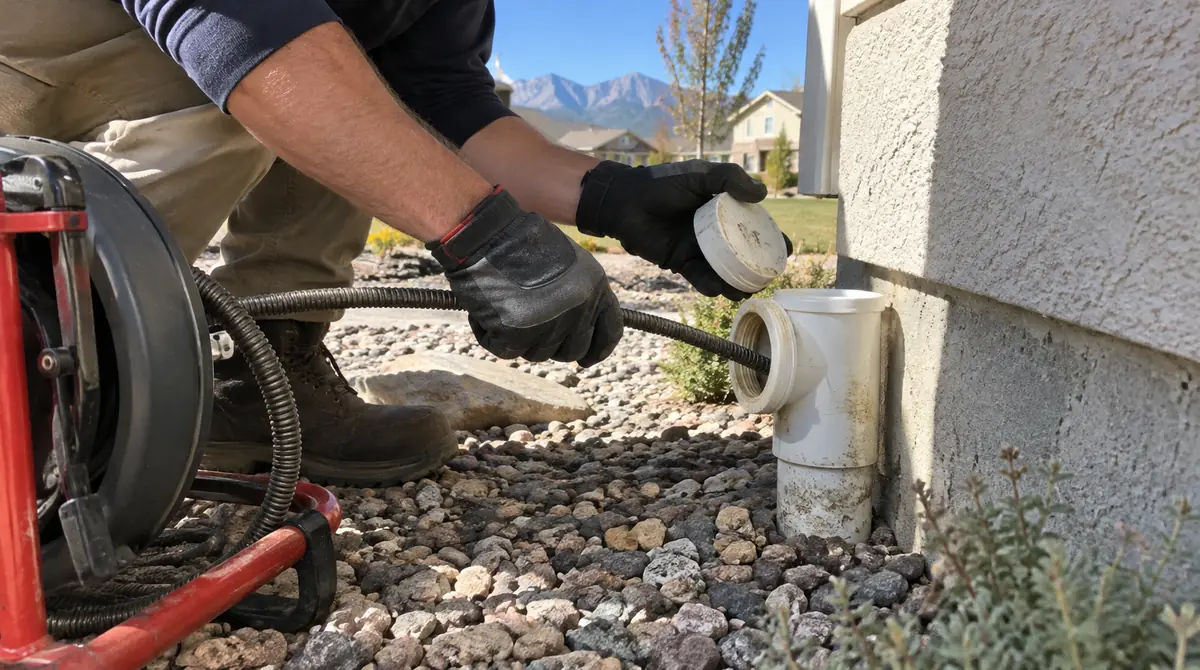
A hand auger or cable machine bores through a clog and pulls it out. It works well on hair, paper and soft blockages. For grease, scale or roots, a plumber may follow up with a heavier cutting head or recommend hydro jetting.
A camera lets the plumber see the pipe after clearing. If the line is cracked, offset or bellied, the clog will come back, and the right answer is a repair. Our camera inspection page explains what the footage shows.
Older Commerce City neighborhoods may have clay or other aging sewer laterals with joints that admit roots. Roots seek the moisture and nutrients in a sewer pipe and can plug a line within a season or two.
Rain can seep into cracked pipe and slow the flow. If your drains crawl after storms, tell the plumber, because that suggests a break in the line. For a possible blockage in the sewer main, the district lists 303-288-2646.
Clearing a drain is priced by where the clog sits and how much work it takes to reach.
Ask what the price includes and whether a camera look after clearing is part of it.
Grease cools inside kitchen drains and coats the pipe walls. The South Adams County district tells customers never to pour grease down a sink, disposal or toilet, and to throw wipes, diapers and paper towels in the trash. Wipes sold as flushable are a leading cause of blocked mains.
Bathrooms clog from hair and soap, and laundry lines clog from lint. In older houses the pipe itself may be rough or sagging, which catches debris and lets it build up.
Hold off on using water in the affected area. Pouring more into a full drain only forces it out of the lowest opening in the house, which is frequently a basement floor drain.
Skip the chemical drain cleaners. They rarely clear a full blockage, they can damage old pipe and they leave standing water that is dangerous for the plumber to handle. A plunger is fine for a single toilet or sink.
A cleanout is a capped pipe giving direct access to the sewer line, normally outside near the foundation or down in the basement. Without one the plumber may need to remove a toilet, which adds time and cost.
If you do not have a cleanout, ask about adding one. It speeds up every future visit.
The place water first shows up hints at how far down the line the blockage sits.
A single fixture usually has a local clog in its own trap or branch line. It is often quick to clear, and it rarely means trouble in the main.
Grease and food scraps build up past the trap, and a disposal that backs up can hide the real blockage downstream. If the sink fills when the disposal runs, see garbage disposal repair.
If a toilet gurgles when the washer drains, or a basement floor drain bubbles after a shower, the main line is the likely problem. Stop using water until it is cleared.
Lint and soap residue narrow washer lines, and floor drains collect grit. Mention which drain it is when you call, since the tools differ.
These clues together are more reliable than any single one.
A cable with a rotating head breaks through most household clogs. If a short cable stops partway, a longer cable or a larger head is the next step.
A camera shows what is in the pipe, from grease and roots to a crack or a sag. See sewer camera inspection for what the picture tells you.
Water at high pressure scours the pipe wall when cabling leaves residue behind. Hydro jetting is meant for grease, scale and roots, provided the pipe wall is intact.
Blast grease, scale and roots off pipe walls with high-pressure water.
Send a camera down the line to check its condition before a repair or home purchase.
Mend a cracked, root-filled or sagging sewer pipe with a spot fix or a longer section.
A clog that comes back usually means something in the pipe catches debris, such as a crack, a sag, built-up grease or roots. A camera inspection reveals which.
They can harm old pipe and leave caustic standing water. They also rarely fix a full blockage. A plunger or a plumber is the safer choice.
If several fixtures are slow together, or the lowest drain in the house gurgles when you run upstairs water, the main is the likely culprit.
When sewage is rising into the house, yes: stop using water and call. A lone slow sink can usually wait for a daytime visit.
A crew can often arrive the same day. Tell the dispatcher which fixtures are affected, whether sewage is rising and when it started, and they will confirm timing on the call.
It depends on which line is blocked, how deep the clog is and what tool is needed. Get the quote spelled out before the work starts, along with what it includes.
A longer cable, a different head or a camera look is the usual next step. If the blockage is a collapsed or cracked section, clearing alone will not hold.
Often, and it is worth asking. A camera shows whether the clog is grease or roots or whether the pipe is damaged, so you do not clear the same problem again and again.
It is common when roots, grease or a low spot in the pipe are involved. A camera inspection tells you which, and then the plumber can recommend a repair or a maintenance interval.
Many contractors take these jobs. Describe the drain and its location, and the dispatcher confirms whether a nearby contractor handles it.
Shut off the taps, then ring the 24/7 line and tell the dispatcher which drains are slow or backing up.
Service area centered on Commerce City and nearby Adams County cities.