Sewer Line Repair
Mend a cracked, root-filled or sagging sewer pipe with a spot fix or a longer section.
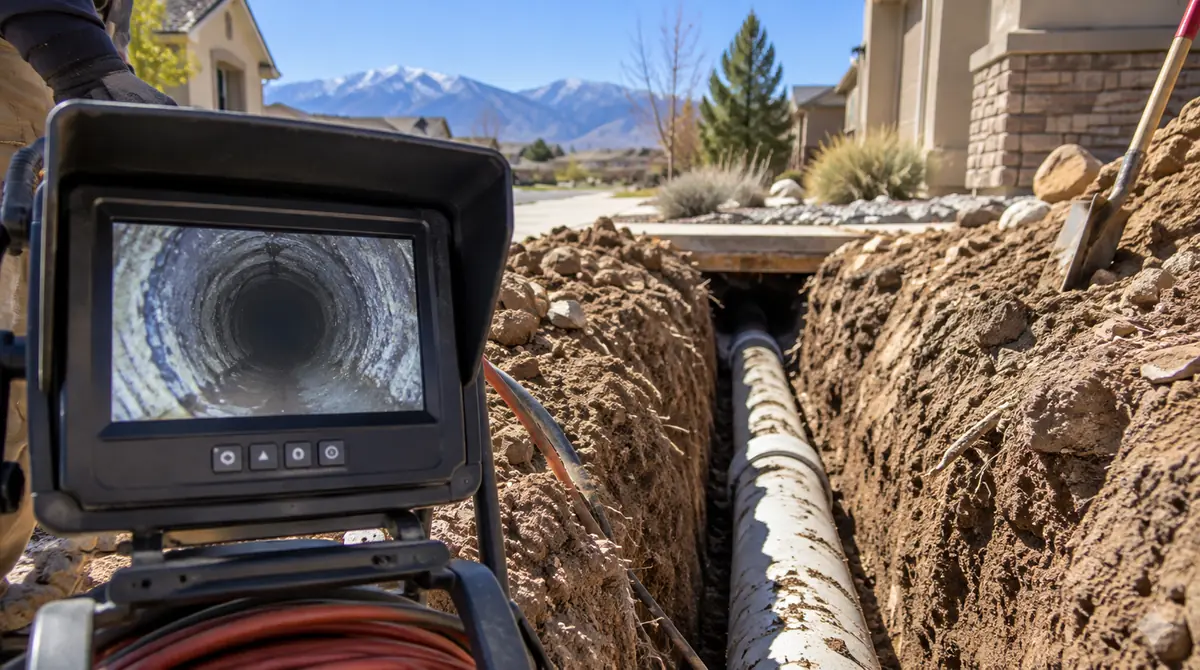
A camera on a flexible rod travels the sewer line and records cracks, roots, sags, offset joints and the type of pipe. You get a video record where you would otherwise get a guess.
Ask for the footage itself rather than only a written summary.
 Serving Commerce City, CO
Ask what the visit covers before you approve any work.
A waterproof camera head with lights travels down the pipe and sends a live picture to a monitor. A locator on the camera lets the technician find its position above ground, so the depth and location of a problem can be marked.
Typical findings include root intrusion, cracks, offset joints, bellies where the pipe sags, grease buildup and scale. The camera also shows what the pipe is made of.
Get one when drains clog more than once, when you are buying a house with an older lateral, when you are planning a landscaping or driveway project over the line, or when you are deciding between repair and replacement.
It is also useful after a repair, as proof that the work is clean and the slope is right.
Many Commerce City homes have laterals laid decades ago in clay or fiber pipe. The district says it maintains sewer mains and will not service utilities on private property, so the pipe on your lot is something you need to know about.
An inspection also reveals the pipe material, which matters for repair choices. For example, fiber pipe such as Orangeburg usually cannot be lined and is typically replaced.
Inspections are priced by access, length and what is delivered.
Ask whether the footage is included before the visit.
The technician enters through a cleanout, a pulled toilet or a vent, feeds the camera down the line and watches the monitor. A dirty pipe may need clearing first so the lens can see.
A typical inspection lasts under an hour. Afterward you should receive an explanation of what was found and, ideally, a copy of the video and a short written note.
Light root growth in a joint may be fine for a while with maintenance. A bellied section that holds water will keep catching debris. A collapsed section or an offset where the camera cannot pass is a repair or replacement.
Ask for timestamps and locations in feet from the cleanout, so a repair crew can find the same spot.
A sewer problem can cost far more than a minor repair, and it can hide behind a clean-looking yard. A camera inspection costs a small part of what a lateral replacement does, and gives you information for negotiating.
Ask the seller whether a lateral inspection has been done, and ask your own plumber to see the footage.
Callers often ask for a camera because the symptoms are vague. A picture of the pipe replaces guessing.
The camera shows grease, roots, scale and foreign objects. It also reveals cracks, offset joints and low spots where water pools.
A trap that will not hold water or a smell in one bathroom can have several sources. Footage can rule the main line in or out. See drain cleaning if the line needs clearing after the look.
The inspection can also trace the path of a line, which helps when the layout is not known or when digging is planned.
A pre-purchase look at the lateral can show whether repairs are coming. Ask for the footage and a written note of what was seen.
The value of the visit is in the details you take away.
Mend a cracked, root-filled or sagging sewer pipe with a spot fix or a longer section.
Install a new sewer lateral from the house to the main when patching is not enough.
Blast grease, scale and roots off pipe walls with high-pressure water.
Often under an hour, depending on access and the length of the line.
A normal inspection does not harm sound pipe. A weak or collapsed pipe is the sort of thing the camera is meant to find.
Yes, if the house is older or the lateral is long. It helps you plan for repair costs.
Many contractors provide one. Ask before the visit so it is part of the agreement.
Ring the 24/7 line and ask. Most inspections are scheduled in daytime hours, though a backup that needs urgent eyes can be reported whenever it occurs.
Yes. The picture shows grease, roots or debris as well as cracks, breaks and sags. That is why the look often comes before any clearing or repair.
It can find causes such as buildup, a crack or a dry trap path. If the smell comes from a fixture trap, the plumber can usually spot it in the same visit.
It is a sensible step, especially for older homes or those with big trees. The footage shows the condition of the lateral so you know what you are taking on.
A locating tool can trace the path and depth while the camera is in the pipe. Ask whether the contractor offers that service when you call.
Phone in and describe the symptoms. We usually begin with a camera run.
Service area centered on Commerce City and nearby Adams County cities.