Sewer Camera Inspection
Send a camera down the line to check its condition before a repair or home purchase.
A lateral that is cracked end to end, collapsed or built from a material that cannot be relined is best replaced, because that is the repair that lasts.
Your camera footage helps decide between repairing and replacing.
 Serving Commerce City, CO
Ask what the visit covers before you approve any work.
One break in an otherwise healthy pipe calls for a repair. Damage that recurs along the run, or pipe that has simply aged out, calls for replacement. Excavating the same line twice costs more than doing it properly once.
The camera footage drives the decision. A contractor who recommends replacement should be able to show you what they saw.
In an open-trench replacement, the crew digs along the old line, removes the pipe and lays new PVC or other approved pipe on a prepared bed at the correct slope. In pipe bursting, a tool is pulled through the old pipe, breaking it outward while drawing the new pipe behind it.
Trenchless methods need an entry pit and an exit pit but save the lawn and driveway. Ask whether your line suits them.
Replacement is among the larger plumbing projects, and a few facts decide its scope.
Compare quotes on method, material and what restoration they include.
Some older Commerce City neighborhoods have clay or fiber laterals laid decades ago. The district says it will not service utilities located on private property, so replacement is the owner's decision and expense.
The expansive clay under many Front Range properties swells and shrinks with moisture, and that movement can pull joints apart over time. A new pipe laid on a proper bed resists it better.
Sewer pipe relies on gravity, so the slope matters. Too little and solids settle, too much and liquid outruns solids. A new lateral should have a consistent fall, a cleanout near the house and a proper connection to the main.
Ask where the new cleanout will sit and whether the quote includes the tie-in at the main, which may need approval from the utility.
Replacement almost always needs a permit and an inspection before the trench is closed. The utility may need to approve the connection to the main.
Plan on a few days for a typical residential lateral, with the toilets out of service for part of that time. Ask for a temporary plan if you have no other bathroom.
Keep trees and large shrubs away from the new pipe, and use root-resistant methods where roots are a known threat. Keep a record of the line's path for future work.
Treat the new line as an asset for the house. A recorded camera pass after installation is a good baseline for later comparison.
Replacing a sewer lateral is a bigger job than a repair, so callers ask how disruptive it will be.
A trench is dug along the old pipe and a new line is laid at the correct slope. It is simple and reliable, but it disturbs the yard, driveway or landscaping above the pipe.
Some pipes can be lined or replaced from small access pits. That limits the digging, but the method depends on the pipe condition, the bends and the diameter. Ask the contractor whether your line qualifies.
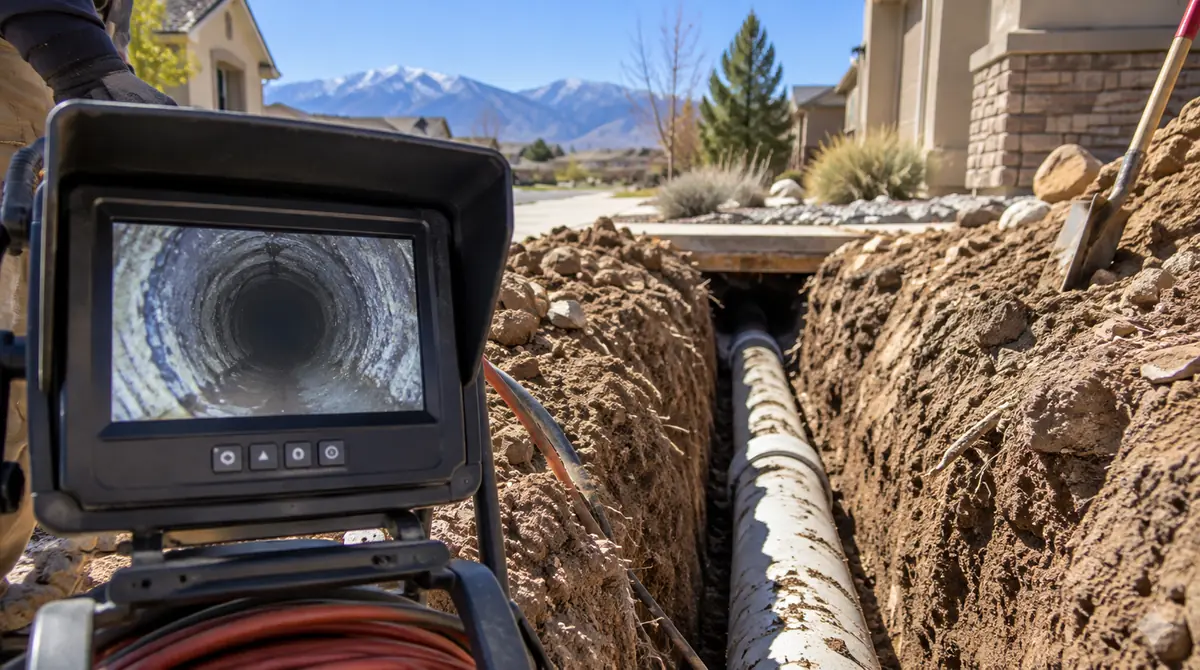
Footage shows whether the pipe is collapsed, offset or just cracked. The result shapes the method, the length and the schedule. See sewer camera inspection.
Replacement quotes can look different while covering the same pipe. Ask for the same details from each contractor.
Send a camera down the line to check its condition before a repair or home purchase.
Mend a cracked, root-filled or sagging sewer pipe with a spot fix or a longer section.
Blast grease, scale and roots off pipe walls with high-pressure water.
That depends on the material. Modern PVC can last for decades, while clay can crack and fiber pipe can collapse much sooner.
It saves the surface but needs pits and a pipe that suits it. Open trench is more flexible when the line is badly damaged.
For part of the work, yes. Ask how long and whether a temporary arrangement is needed.
The district says it does not service utilities on private property, which generally leaves the cost with the owner. Confirm with your provider.
Yes. Replacing a lateral is planned work, though a line overflowing at this moment can be reported at any time, and the urgent part comes first.
No. It depends on the pipe condition, the layout and the size. A camera inspection helps the plumber decide whether lining or pipe bursting is practical or whether digging is the better option.
When damage runs along much of the pipe, when the line is badly offset or when repairs keep failing, replacing the lateral usually costs less over time than repeated spot fixes.
The schedule varies with the length and the method. Ask for an estimate and ask how the household should plan for restroom use during the work.
In most places yes. Ask the contractor who handles the permit and when inspection is scheduled so the work does not stall.
Call and describe the symptoms. The dispatcher will explain where a camera inspection fits in.
Service area centered on Commerce City and nearby Adams County cities.