Sewer Camera Inspection
Send a camera down the line to check its condition before a repair or home purchase.
Sluggish drains, toilets that gurgle and a sewage smell in the yard may all trace back to a single cracked pipe. A repair begins by finding exactly where the line is broken. If sewage is rising into the house, stop using water and phone the 24/7 line immediately.
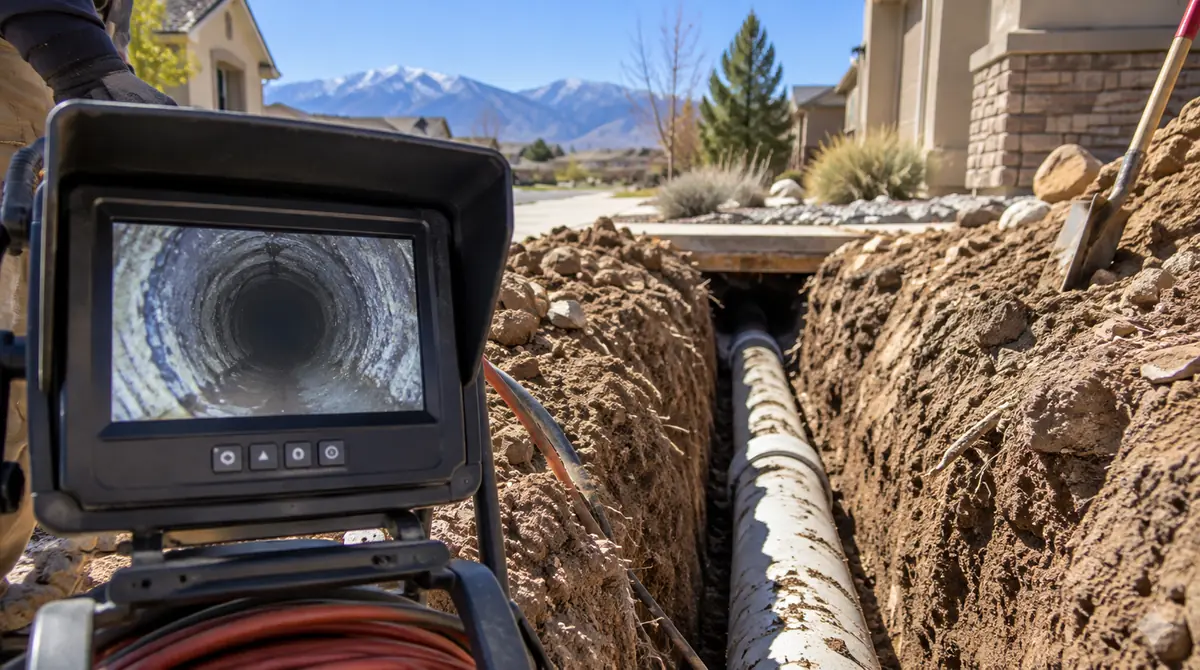
Schedule a camera inspection ahead of any digging so the scope is clear.
 Serving Commerce City, CO
Ask what the visit covers before you approve any work.
The lateral is the pipe taking waste from your house to the municipal main beneath the street or alley. It runs under lawn, paving and occasionally a tree. Maintaining the main is the utility's job; the lateral is typically the owner's responsibility.
In Commerce City the South Adams County district says it maintains sewer mains and will not service utilities on private property, so the line on your lot is yours to deal with.
Roots slip into joints and widen them. Ground movement can offset sections or open a crack. Old clay and cast iron age and corrode, and some mid-century fiber pipe softens and collapses.
Heavy loads above the pipe, such as a new driveway or parked equipment, can crush a shallow line. Poor original slope lets waste settle and form a clog that keeps returning.
Many Commerce City homes are decades old, and so are their laterals. Roots, soil movement and age all take a toll, and expansive clay under the Front Range can shift a pipe that was laid straight.
When more than one drain slows after a hard rain, tell the plumber. That pattern points to water entering through a crack, and a camera shows where. If neighbors report the same trouble, the district's after-hours number is 303-288-2646.
Sewer repair is priced by where the damage is and how it is fixed.
Before you pick a repair method, request the camera footage and a written scope.
Three methods are common. A spot repair excavates and replaces one bad section, which fits an isolated break. Lining feeds in a resin-saturated sleeve that hardens into a pipe within the pipe, mostly without trenching. Pipe bursting pulls fresh pipe through the old route as it cracks the original apart.
The right choice depends on the camera findings. Ask the contractor to show the footage and explain why the chosen method fits your pipe.
Sewer work generally needs a permit and an inspection through the local building office. Your contractor should say who pulls it and when the inspector comes.
Call 811 before any digging, so buried gas, electric and water lines are marked. Keep the camera footage and the permit record, because they matter when you sell the house.
Reduce water use. Spread laundry over several days, skip the dishwasher on a bad day and avoid long showers. Do not use chemical cleaners.
If sewage is coming up into the house, quit using water altogether and call. Keep children and pets out of the affected area.
Callers describe a sewer problem in many ways. The symptom points toward the cause, and the cause points toward the repair.
When tubs, toilets and floor drains back up at the same time, the blockage is probably in the main or in the lateral out to the street. Stop using water and call. If neighbors have the same trouble, the problem may be the district main, which is the provider's job.
A faint odor in a bathroom can come from a dry trap, a cracked pipe or a slow leak under the floor. A camera look tells you which.
Roots find small cracks and then widen them. One cracked spot or a joint full of roots may only need a short repair, while a long run of damage points toward replacing the lateral. See sewer line replacement.
Knowing the order of events makes the quote easier to judge.
Send a camera down the line to check its condition before a repair or home purchase.
Install a new sewer lateral from the house to the main when patching is not enough.
Open slow or stopped kitchen, bath, laundry and main drains, then work out the cause.
Multiple slow drains, gurgling, a sewer smell outside, wet patches in the yard and repeat clogs are the usual signs.
Often partly. Lining and pipe bursting reduce digging, though they need access pits, and not every pipe qualifies.
The district maintains the mains and says it will not service utilities on private property. The lateral on your lot is generally yours, but ask your provider.
Usually yes. Ask the contractor who pulls it and which office inspects.
Leave sinks, tubs, toilets and the washer alone, since each gallon worsens the backup. Keep kids and pets clear of the area and ring the 24/7 line. A contractor can open the line first and check it for damage afterward.
Often. Roots are cleared first, and then a short crack can be mended where it sits. If the camera shows damage along a long run, replacement may be the better value.
Yes when sewage is rising in the house. Stop using water, keep people out of the affected area and call the line. The dispatcher will prioritize an active backup.
A camera inspection shows the position, and the plumber can mark it on the surface. Ask for the distance from the cleanout and the depth.
This service covers the sewer line from the house to the main. Septic tanks and drain fields are a different specialty, so describe what you have and the dispatcher checks whether a nearby contractor takes that work.
It varies by property and by district rules. Check with your water and sewer provider, and tell the plumber about the shared line so the quote is written correctly.
Go easy on water use and phone in. A camera inspection is typically where we start.
Service area centered on Commerce City and nearby Adams County cities.