Water Heater Installation & Replacement
Swap out a worn tank for a unit sized for your household, fuel and space.
No hot water, a puddle at the base of the tank or a rumble from the utility room. Most water heater trouble comes down to a short list of parts, and a leaking tank is the one that cannot wait.
With a leaking tank, shut the cold water valve above the heater before anything else.
 Serving Commerce City, CO
Ask what the visit covers before you approve any work.
Start by locating the water. A drip at a pipe fitting or the relief valve can usually be repaired. Water weeping from the bottom of the tank means the steel has corroded through, and the tank has to be replaced.
Shut the cold supply valve at the top of the heater. On an electric unit, flip its breaker off. On a gas unit, set the control to pilot or off. Then phone in and read the dispatcher the rating label on the tank.
On an electric heater the usual suspects are a tripped breaker or reset button, a burned-out heating element and a failed thermostat. Two elements work in sequence, so one failed element may leave you with lukewarm water that runs out fast.
On a gas heater a pilot that will not stay lit, a dirty burner, a weak thermocouple or a bad igniter are common. If you ever smell gas, leave the house and call the gas company from outside before anything else.
Repair pricing follows the part that failed and how easy it is to reach.
Ask for the repair price and the cost of replacement side by side when the tank is more than eight years old.
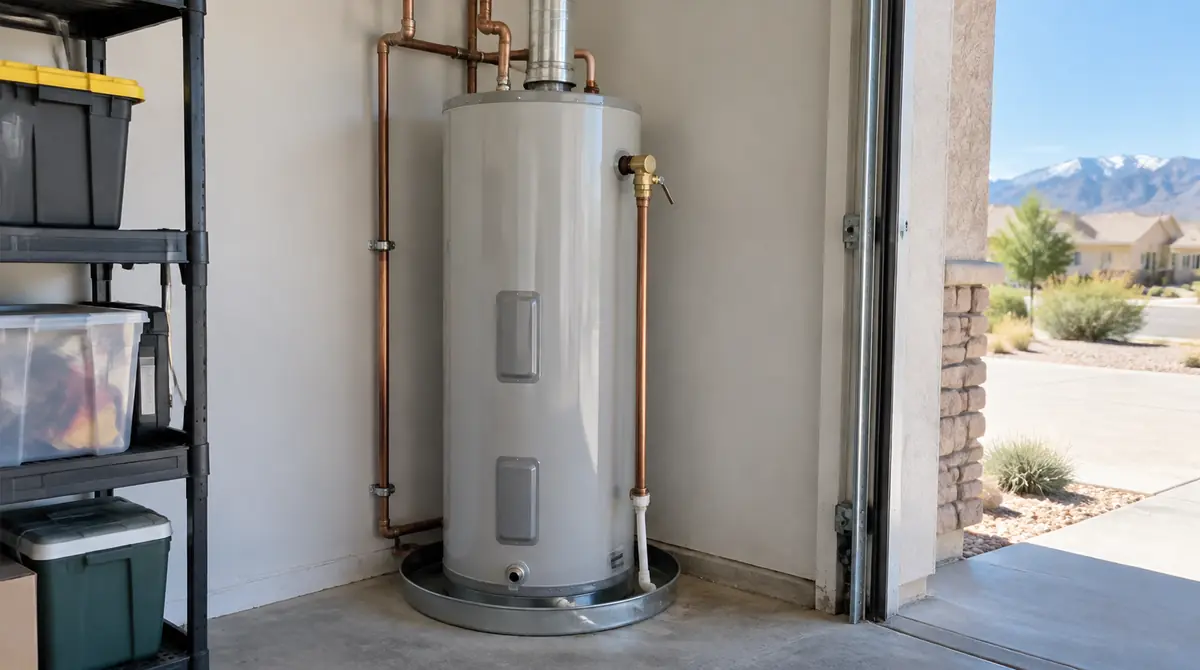
Heaters in Commerce City homes often sit in basements, garages or utility closets, where a slow leak can run unnoticed for weeks. A drain pan piped to the outdoors, if one was installed, catches small leaks and warns you early.
At roughly 5,200 feet above sea level, gas appliances are normally set up for altitude, so ask the technician to confirm the burner and venting are right for it. The water district's treatment targets about 7 grains per gallon of hardness, which still leaves scale to flush out of a tank each year.
Rumbling or popping usually means sediment has settled in the tank and is trapping steam under it. Flushing may help, but a thick layer can be too stubborn.
A rotten-egg smell often comes from a reaction between the anode rod and bacteria in the water. A plumber can swap the rod or treat the tank. Pressure that spikes can open the relief valve, which is a sign to check the pressure reducing valve and add an expansion tank if the system is closed.
A tank near the end of its life is not worth much repair money. Most tank heaters run for about ten years, give or take, so a leaking ten-year-old is a replacement, while a six-year-old with a bad element is a repair.
If the repair bill would pass roughly half the cost of a new unit, or the tank is leaking, replacement is the better value. Our replacement page covers sizing and installation.
Draining a few gallons from the bottom of the tank each year clears loose sediment before it hardens. Test the relief valve by lifting its lever briefly, and have a plumber look at the anode rod every few years.
These steps cost little and add years to a tank. A heater that has never been flushed may need professional help, because the drain valve can clog or break when first opened.
Water heater calls fall into a few groups. Telling the plumber which one you have speeds up the visit.
A wet floor under a tank is the most urgent case. Shut the cold water to the heater and turn off its power or gas. A leak from a fitting or valve can be repaired, but a leak through the tank wall means replacement. See water heater replacement.
Electric units can lose a heating element or a thermostat. Gas units can lose a pilot flame or a thermocouple. A tripped breaker or a reset button is worth checking first, as is the power or gas supply.
If the pilot will not stay lit, a worn thermocouple is common. A gas smell changes everything. Step outdoors, then phone 911 or the gas company, and deal with the heater afterward.
Rumbling points to sediment. A code on the display narrows the fault. Share the code with the dispatcher.
Small steps limit damage and give the plumber a head start.
Swap out a worn tank for a unit sized for your household, fuel and space.
Descale, flush, troubleshoot or replace an on-demand water heater.
Extract water, dry the structure and rebuild after a leak, frozen pipe or basement flood.
Start with the breaker or the pilot. Typical failures are the element, thermostat, thermocouple or igniter, and a plumber can test each.
Yes. Close the cold supply and cut the power or gas, then phone for help. A tank that is leaking can flood a basement or damage flooring.
Many last about ten years, with wide variation based on use, water quality and upkeep.
About once a year is a common guideline. Hard water or a very old tank may call for a professional visit.
If water is pooling, yes. Close the cold inlet, shut off power or gas and call. Same-day help is common, and the dispatcher gives you a time on the call.
Maybe. A tank that old has little life left. A cheap fix on a dry tank can be sensible, but any leak through the shell means it is time for a new one.
A worn thermocouple or a dirty pilot assembly is common. A plumber can test it and replace the part. A gas odor at any point means going outside before you dial anyone.
Yes. Tell the dispatcher the make and the code shown. Many codes point to a specific part, and the plumber can confirm it on site.
Both are common maintenance jobs on tank heaters. Ask the dispatcher to include them when you call so the right time is set aside.
If the heater is leaking, stop its water supply and then phone the 24/7 line.
Service area centered on Commerce City and nearby Adams County cities.