Water Heater Installation & Replacement
Swap out a worn tank for a unit sized for your household, fuel and space.
A well-kept tankless heater can last for many years. Scale building up inside the heat exchanger is the usual reason one loses flow or starts showing error codes.
Keep the model number at hand for the call; it helps the contractor prepare.
 Serving Commerce City, CO
Ask what the visit covers before you approve any work.
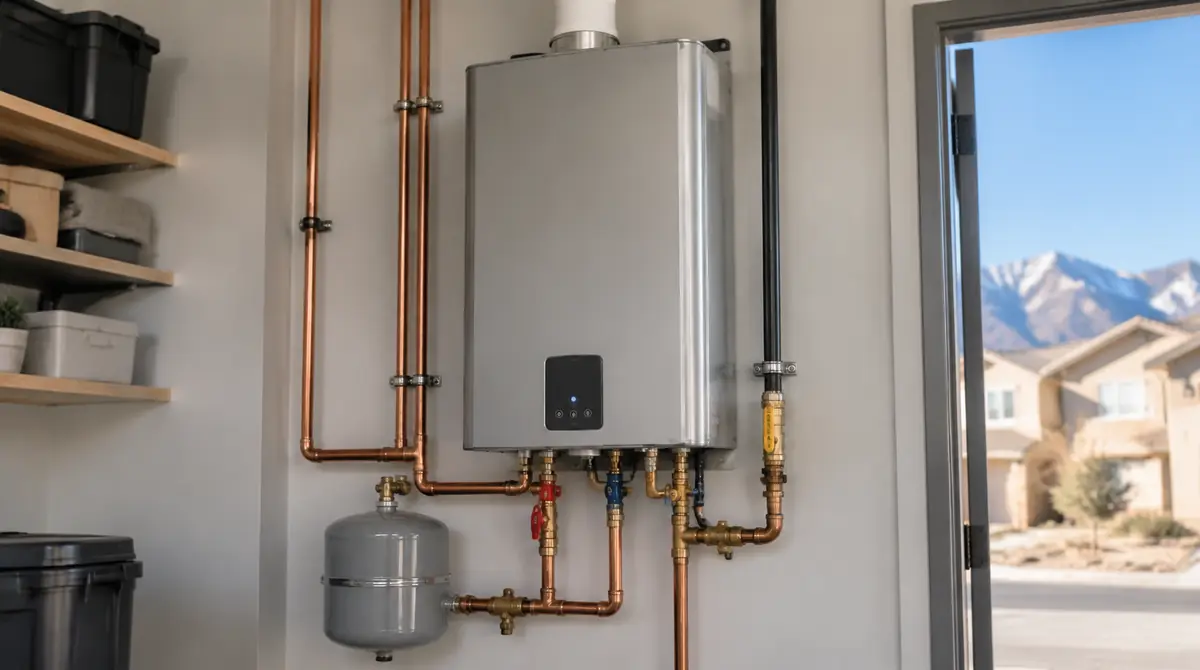
A tankless heater fires a burner or energizes elements only when water flows. It passes cold water through a heat exchanger and delivers hot water without a storage tank. That saves space and removes the standby loss of a tank.
Because everything happens in a compact exchanger, minerals and flow problems show up quickly. Maintenance is not optional on these units.
To descale, a mild acid, typically white vinegar or the maker's solution, is pumped through the heat exchanger to dissolve the mineral crust. The pump and hoses attach to service ports on the unit's isolation valves.
Frequency depends on water hardness and use. Many manufacturers suggest yearly service, and some homes need it more often. Skipping it can void a warranty.
Pricing depends on whether the visit is a routine service or a repair.
Ask whether the visit includes a test of flow and temperature rise.
Water arrives colder in a Colorado winter than in a warm coastal climate, so the unit has to raise the temperature further and produces less flow. At about 5,200 feet, burners also need altitude setup, so ask the installer to confirm it.
Scale is still the main enemy. The district's softening process targets about 7 grains per gallon on average, so testing the hardness at your tap shows how often to descale.
Error codes point to a cause: ignition failure, exhaust blockage, flow sensor trouble, overheating or a gas supply issue. A technician reads the code, checks the supply and cleans or replaces the part.
Problems with a cold-water sandwich, where a burst of cold water arrives between two hot ones, often come from short shutoff times or a flow rate too low to trigger the burner.
With good care a tankless heater can run a decade or more. Replace it when a heat exchanger is cracked or too scaled to clean, or when repair costs approach the price of a new unit.
If you are moving from a tank to tankless, plan for gas line sizing, venting and a new condensate drain on condensing models.
A tankless heater is rated by how many gallons per minute it can heat to a set rise. In winter, when incoming water is colder, the same unit delivers less. Size for winter and for the number of fixtures you run together.
The gas line must carry enough volume for the burner. An undersized line starves the unit and leads to lockouts, especially at altitude.
Tankless heaters need less space, but they do need attention. Callers ask about three things most often.
Minerals coat the heat exchanger over time and cut flow and efficiency. A flush with a descaling solution clears it. How often depends on your water and use, so ask what interval the manufacturer advises.
A code on the display points to ignition, sensor or flow trouble. Tell the dispatcher the brand, the code and any beeping.
A drip from a fitting is usually fixable. A leak from inside the unit may mean replacement. Banging or whistling points to scale or a flow issue.
The age and the symptoms help you choose.
Swap out a worn tank for a unit sized for your household, fuel and space.
Set up a softener for scale, or revive one that has quit working.
Troubleshoot cold showers, leaks, rumbling and pilot or element failures.
Many makers suggest once a year, and hard water or heavy use can shorten the interval.
Scale, low flow, a faulty sensor or a heater sized too small for the winter inlet temperature can all be causes.
Some owners do it with a pump and vinegar, but a technician can check the other parts at the same visit.
Yes, softer water slows scale buildup. It is worth considering if your water is moderately hard or harder.
Phone any time of day. When the unit is leaking or smells of gas, shut it off first. The contractor's calendar sets the arrival window.
It varies with water hardness and use. Many makers suggest a yearly flush, and heavy use or hard water may call for more. Check the manual and ask the plumber.
Many contractors work on common brands. Tell the dispatcher the make and model so they can confirm before sending someone out.
Write down the code, turn the unit off and on once, and call if it returns. The code helps the plumber bring the right part.
A small repair on a unit that otherwise works is often worth it. If the heat exchanger has failed on an older unit, replacement may make more sense.
Note the model number and any error code before you phone, since both help the contractor get ready.
Service area centered on Commerce City and nearby Adams County cities.