Leak Detection
Pinpoint a hidden leak using acoustic listening, thermal imaging and pressure tests.
A slab leak is a pressurized supply pipe leaking in or beneath a concrete floor. Pinning down its exact spot decides whether you get a small patch or a floor torn open across half a room. Water coming up through a floor, or a meter that never stops, deserves a call at any time of day.
Slab leaks do not heal on their own. Call early and ask what repair options exist.
 Serving Commerce City, CO
Ask what the visit covers before you approve any work.
The name covers any leak in a supply pipe that runs beneath or inside a concrete slab. In a Colorado home that can mean the main floor slab of a slab-on-grade house, a garage slab or a poured basement floor with lines buried below.
With the pipe buried, the early evidence is indirect: a bill that rises quietly, flooring that stays damp in one spot, or hot water that takes ages to reach a tap.
Copper can wear from the outside where it touches concrete or shifting soil, and from the inside where water chemistry is harsh. Joints made decades ago may loosen as the ground moves. Plastic lines are less prone to corrosion but can be damaged during construction or by a sharp edge.
Expansive clay beneath a house adds stress, because the soil swells and shrinks with moisture and can push a slab out of true over time.
The method of repair usually matters more to the price than the detection itself. These factors set the total.
Have the quote itemized, with concrete cutting, permits and patching shown as included or as separate lines.
Not every Commerce City house has a slab foundation, but plenty have garage slabs and basement floors with supply or drain lines beneath them. Ask the plumber where the line runs before you decide on a repair path.
A warm spot on a floor is worth investigating at any time of year, because it can mean a hot water line is leaking below the surface.
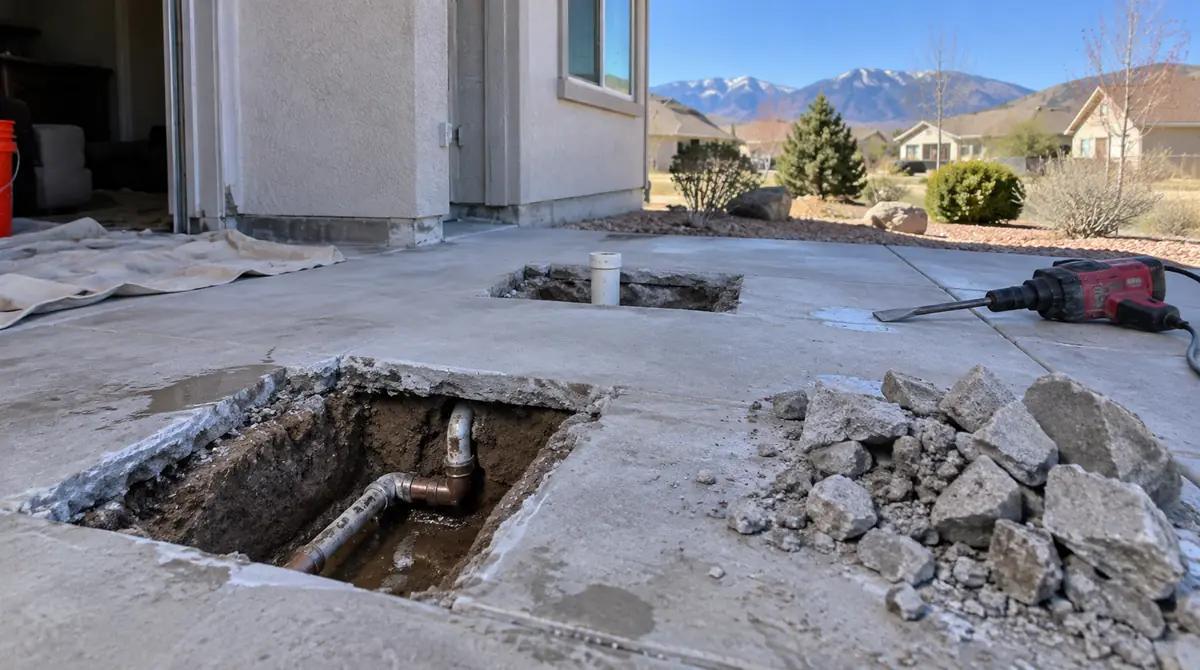
The plumber first confirms the leak is under the floor and not in a wall by shutting off sections of the system and watching pressure. Electronic listening gear then traces the sound, and a thermal camera can show where hot water warms the slab.
Marking the exact spot matters because concrete cutting is expensive. A tight, accurate opening saves money and keeps the damage small.
Three approaches exist. A spot repair cuts the slab over the leak and mends the pipe where it lies. A reroute retires the buried run and feeds the fixtures through the attic or walls. A repipe renews the whole supply system, which fits when several lines are on their way out.
Each has trade-offs for cost, mess and how long the fix lasts. Ask the contractor to explain why the proposed path fits your house, and to say what flooring or concrete patching is included.
Shut off the water at the main when you leave the house or go to bed. Keep an eye on the meter, and move rugs and boxes off the affected floor.
A slab leak that runs unchecked can undermine the soil beneath the concrete and soak wood, drywall and flooring. If you see water coming up through a floor, treat it as an emergency.
A leak below a slab rarely shows itself in one dramatic moment. It leaves small hints that build over weeks.
Look for a damp patch on carpet, a floor that feels warm underfoot, curling or lifting flooring and moisture creeping along a baseboard. In a garage, a wet edge where the slab meets the footing is a common sign.
A faint hiss or rush of water when everything is off points to a pressurized pipe. A bill that climbs while habits stay the same adds weight. Run the meter test described on the leak detection page to confirm.
A hot water line under the floor can warm the surface above it. If one room is warm and the rest are not, mention that on the call.
The right fix depends on where the pipe runs, how many leaks it has and how old it is.
Pinpoint a hidden leak using acoustic listening, thermal imaging and pressure tests.
Swap aging galvanized, copper or early plastic supply pipes for new lines.
Extract water, dry the structure and rebuild after a leak, frozen pipe or basement flood.
Often yes, if you shut off the water when you are away and watch for damage. If water is coming through the floor, treat it as urgent.
A plumber isolates sections of the system and watches pressure. Sound and heat patterns then show whether the leak is in the slab.
A leak that runs for a long time can wash out or soften the soil under a slab. Fixing it early lowers that risk.
Policies differ. Many cover the damage from a sudden leak but not the cost of repairing the worn pipe itself. Read yours and call the insurer.
Water rising through the floor, a meter that spins nonstop or a hot spot on the slab each justify closing the main and phoning the 24/7 line. A slow seep can hold until morning, but it should not be left running for days.
Usually from above, with listening gear, temperature scanning and pressure tests. The floor is opened only once the spot is marked.
No. Running a replacement line above the floor spares the concrete. A plumber can describe both routes and the tradeoffs in disruption, time and cost before you approve either one.
It might be, or it might be groundwater after heavy rain. A pressure test on the supply lines tells them apart. If the pipes hold pressure, the water is likely coming from outside, and that is a drainage matter more than a plumbing one.
Often, though practices vary. Ask whether any detection charge counts toward the repair.
Shut the main valve if water is spreading, keep people off wet floors, and note the time and the meter reading. Move rugs and belongings off the damp area.
Close the main valve if you can get to it, then phone in. Mention any warm floor spots, water noises or changes in your bill.
Service area centered on Commerce City and nearby Adams County cities.