Slab Leak Detection & Repair
Find and repair a failing pipe under a concrete floor, garage slab or basement floor.
Pinhole leaks that keep appearing, water that runs brown or pressure that fades each year all point the same way. Repiping replaces the supply lines through the house instead of patching them one by one.
Ask for a quote that names the material, the wall repair and the permit.
 Serving Commerce City, CO
Ask what the visit covers before you approve any work.
One leak on an otherwise sound pipe is a repair. Several leaks along different lines, in a house with pipe from the same era, is a pattern. The inside of old galvanized steel scales over and narrows, so flow falls even when nothing leaks.
Repiping can also be a good moment to reroute awkward runs, add shutoff valves and tidy the connection at the water heater.
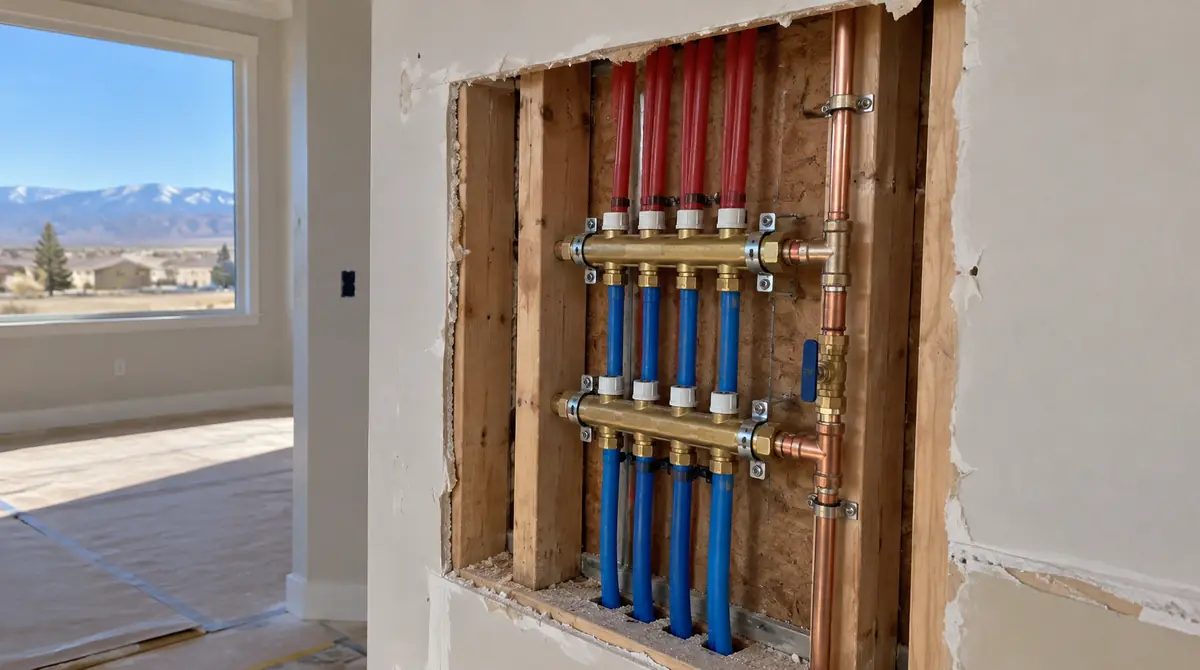
PEX plastic tubing is common in new construction and repiping because it is flexible, resists corrosion and needs fewer joints. Copper lasts a long time and is a traditional choice, though it costs more in parts. CPVC is another plastic option for hot and cold supply.
Each has strengths. Ask the contractor why they recommend one over the others for your house, and whether local code allows it.
Commerce City has neighborhoods built over many decades, and the pipe in the walls reflects that. Older houses may carry galvanized steel or early copper, while newer ones usually have PEX or modern copper.
A plumber can often identify your pipe material from the lines beside the water heater and the main shutoff. The district's softening brings average hardness to about 7 grains per gallon, so for most homes age, joints and soil movement are bigger concerns than scale.
A whole-house repipe is among the bigger plumbing jobs, and several factors set the total.
Line the quotes up on the same material, the same scope and the same restoration work.
The plumber maps the system, cuts access openings in drywall and runs new lines from the main to each fixture. Old pipe is capped or removed. The new system is pressure tested before the walls are closed.
A typical house takes days, not weeks, though large homes with finished ceilings take longer. The permit and inspection are part of the schedule.
The water will be off for stretches of each day. Plan for a place to shower, and set aside drinking water. Cover furniture and clear paths to the walls the crew will open.
Dust and noise are real. Ask whether the quote includes patching and painting the access holes, or whether a drywall contractor handles that.
If you are not sure the whole system needs replacing, a leak survey and a pressure test can show how widespread the problem is. Our leak detection page describes how that works.
Ask the plumber to show you the failed pipe. Cut samples of corroded galvanized steel or pitted copper tell the story better than any description.
Callers ask about repiping for different reasons. Some have rusty water, some have repeated leaks and some worry that a pipe will crack before it fails.
Older steel pipe corrodes from the inside, which narrows it and drops pressure. Flaking can turn water brown. Replacing it is a common reason for a whole-house job.
Copper lasts a long time, but pinholes and failing joints can appear. A few repairs may be enough if the rest looks healthy. Many failures in different spots argue for replacement.
Some early plastic supply lines can become brittle with time and heat. If a crack-prone type runs through your house, replacing it on your schedule beats an emergency later.
Knowing the sequence helps you plan around it.
Find and repair a failing pipe under a concrete floor, garage slab or basement floor.
Fix or replace the buried supply pipe running from the meter to your home.
Pinpoint a hidden leak using acoustic listening, thermal imaging and pressure tests.
Many houses take a few days. Larger homes, finished walls or multiple stories can take longer.
Usually not, but water is off for long stretches. Many families stay elsewhere for a night or two if they have young children.
Both work. PEX is cheaper and faster to install, and copper has a long track record. Ask which one the contractor recommends and why.
If the cause is narrow, corroded pipe, yes. If the cause is a failing regulator or a partly closed valve, another fix is needed. A pressure test tells which.
It depends on the pipe material and how many failures you have. A single repair can be enough for sound pipe. Repeated leaks or rusty water point toward replacing more.
Often, depending on the layout. Routing through attic or crawl space reduces wall openings, but fixtures still need connections. The plumber can explain what would be opened.
A pinhole can be repaired, but several of them suggest the pipe is thinning. Ask for a judgment on the remaining pipe before choosing a repair or a replacement.
It varies with house size and access. Ask for a daily schedule, and ask whether water can be restored in the evenings.
Phone in and tell us where the leaks have shown up and how old the house is. A local contractor can be arranged to talk it through.
Service area centered on Commerce City and nearby Adams County cities.