Leak Detection
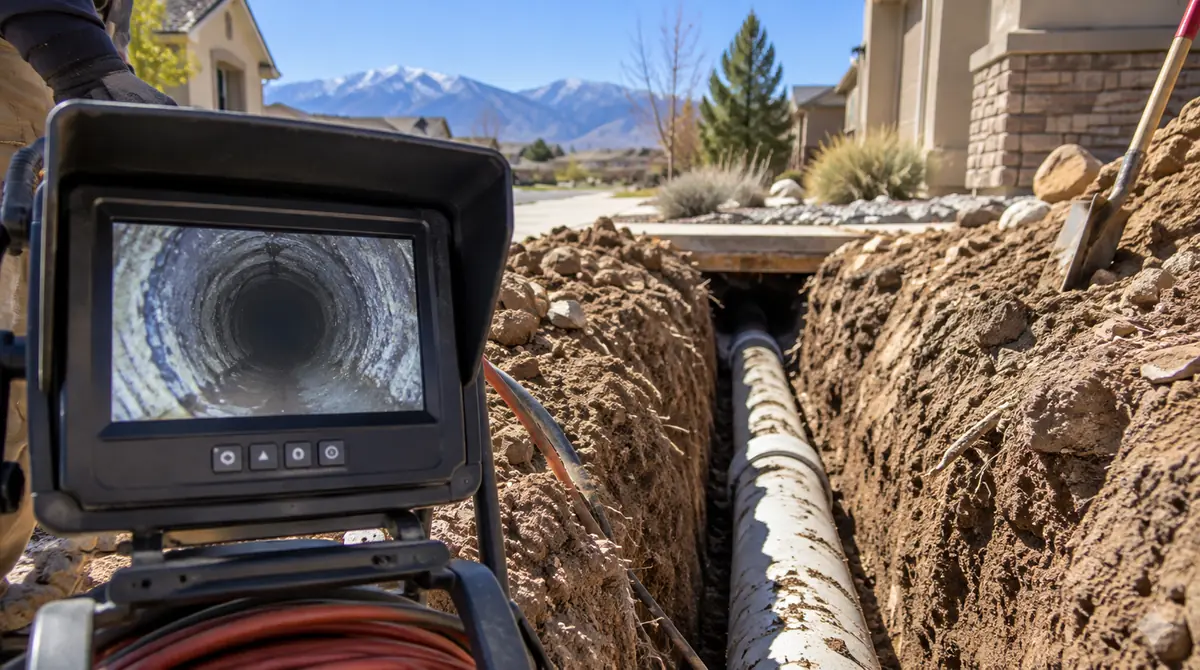
Pinpoint a hidden leak using acoustic listening, thermal imaging and pressure tests.
Your service line is the buried pipe feeding the house from the meter. When it fails, pressure sags, the bill rises and one stretch of lawn turns soggy for no clear reason. Water bubbling up in the yard, or pressure that has fallen away, is urgent. Phone the 24/7 line.
Ask who owns which part of the line before the dig starts.
 Serving Commerce City, CO
Ask what the visit covers before you approve any work.
From the meter pit the service line travels underground to the house, passing under lawn, flower beds, walks and sometimes the driveway. It enters through the foundation wall or floor, usually near a main shutoff and a pressure reducing valve.
Knowing the route helps. Ask the plumber to mark it before any digging, and call 811 so public utilities in the area are marked as well.
Old galvanized or copper lines corrode and leak at joints. Roots, shifting soil and frozen ground can crush or split a pipe. A line that was installed too shallow or with sharp backfill can fail years later.
In Colorado, a pipe buried above the frost line in a bare yard can freeze before the first big snow. A leak under a lawn may only show as a green strip or a patch that stays soft.
Water in Commerce City comes through the South Adams County Water and Sanitation District, which says its main shutoff for a house sits at the meter. If you cannot find yours, look for a lid in the lawn or sidewalk near the street.
Clay soil that swells and dries with the seasons can strain a buried line over many years, and the cold nights of late October bring the first real risk of frozen pipe.
Length, depth and the surface above the pipe drive most of the price of a service line job.
Ask whether restoring the lawn, driveway or sidewalk is included, and who handles the call to mark underground utilities.
A short leak in a line that is otherwise sound can be spot repaired. If the pipe is the same age and material along its whole length, one repair often leads to another, and replacing the full run is cheaper over time.
Trenchless methods can sometimes run a new line without digging a continuous trench. Ask whether that is an option for your yard and whether the contractor does it or subcontracts it.
Plan on the water being off for part of the day. Clear the driveway of vehicles, flag your sprinkler heads and decide where the dog will wait.
After the new pipe is in, the contractor pressure tests it, backfills the trench and restores the surface. Ask how the yard, sod or paving will be handled.
Utilities and owners divide responsibility differently. The South Adams County district says it will not service utilities on private property, which generally puts the line past the meter on the owner. Other providers set the boundary somewhere else.
Before paying for a dig, ask your water provider where its responsibility ends. A leak at the meter pit itself belongs to the utility, and the district lists 303-288-2646 for that.
The buried supply line is easy to forget until it fails. It runs through soil that freezes, shifts and swells, so age and ground movement both wear on it.
Low pressure in every fixture, a wet patch or strip of lush grass over the pipe path and a meter that runs with the house shut off all point outdoors. Sometimes there is no water at all.
The meter and its box belong to the water provider. If you see water bubbling around the box, call the provider as well, because the fix on its side is its job. Water that appears after the meter, on your side, is yours to repair.
A single break can be mended with a short section. A line with several failures, or one made of old material, is usually better replaced. Ask the contractor to identify the pipe material where it enters the house before you decide.
Excavation is the costly part of this job, so the planning matters as much as the repair.
Pinpoint a hidden leak using acoustic listening, thermal imaging and pressure tests.
Shut off the flood, then replace the split or cracked section of pipe.
Swap aging galvanized, copper or early plastic supply pipes for new lines.
If water surfaces at the meter or toward the street, call the utility. If the wet spot lies between the meter and the house, call a plumber.
A straightforward job can take a day, while long runs, hard digging or restoration work can stretch it. The contractor can estimate once the line has been located.
Often yes. Ask the contractor who pulls it and which office inspects the work.
A trench is the usual method, though trenchless options exist for some lines. Ask how the surface will be restored before you agree.
Phone the 24/7 line. A failed outdoor line can flood the yard or leave the taps dry, so tell the dispatcher where water is surfacing and how much pressure remains. The nearest contractor is contacted, and arrival time depends on their schedule.
As a rule the provider keeps its main and meter, and you keep the pipe that runs from the meter to your house. Lines differ, so confirm with your water provider before paying for digging.
Close the main valve inside the house. A dial that keeps turning puts the loss on the buried run ahead of the valve. A dial that stops points inside the house.
Not always. The choice depends on soil, the path and what sits on top of the pipe. Ask the contractor which method fits your lot and what each one would disturb.
Confirm the main valve is open and see whether neighbors are affected, since that points to the provider. If only your house is dry, call the plumber and describe when it stopped.
Houses of different ages use different pipe materials. Ask the contractor to identify yours at the entry point, and your water provider may hold records. The material affects whether repair or replacement is wiser.
If water is flowing, close the main valve and phone in with what you have seen and where.
Service area centered on Commerce City and nearby Adams County cities.