Leak Detection
Pinpoint a hidden leak using acoustic listening, thermal imaging and pressure tests.
A spa is a small water system with pumps, valves and plumbing in a cabinet. When it loses water, runs weakly or needs to be connected to the house, the plumbing side is a separate job from the electrical side.
Switch off power to the spa at the breaker before you call about a leak.
 Serving Commerce City, CO
Ask what the visit covers before you approve any work.
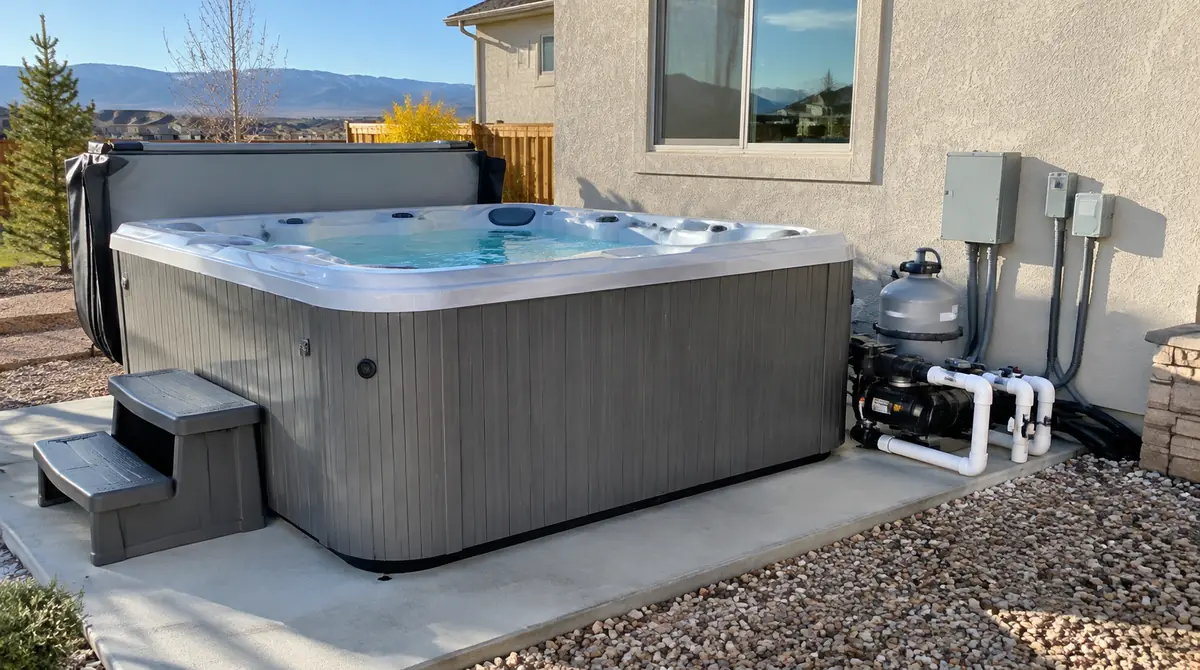
Inside a spa shell, flexible PVC pipe links jets, the pump, the heater and the filter. Unions and valves let a technician service each piece. Outside, there is a fill line, a drain line and sometimes a bleed for air.
A plumber handles pipe, unions, valves, fill and drain connections. The electrical work, including the dedicated circuit and GFCI protection, belongs to a licensed electrician.
Start with the simple check. Mark the water level, turn off the jets and heater, and see how far the level drops over several hours. Then run the jets and compare. A drop that appears only when the pump runs points to the plumbing on the pressure side.
Common culprits are loose unions, a worn pump seal, cracked fittings and leaks at the heater. Fixing a union is a quick job. A leak in pipe behind the shell may call for a technician and a cabinet teardown.
Spa work ranges from a tightened union to a full connection for a new tub. These factors affect the total.
Ask whether the quote includes the fill and drain connections, and who handles the electrical side.
Spas are a year-round feature in Colorado, and cold nights make the heater and insulation work harder. A cabinet that gets wet in winter can crack a pipe, so address small leaks before the freeze.
Many Commerce City yards sit on clay soil that moves with moisture. A heavy tub on a pad that settles unevenly can strain the plumbing connections, which is worth checking at each service visit.
A new tub on a pad needs a water source to fill it and a safe place to drain it. A hose bib with a vacuum breaker or backflow protection handles the fill, and a drain plan keeps water from running toward the foundation.
Ask the plumber to check the pad, the nearest hose connection and the drain route before delivery day. Gas heaters, where used, need a separate gas line installation.
A spa that is not used or heated through winter can freeze, and a frozen pump or pipe can crack. If the power goes out in a hard freeze, drain the equipment or call for help promptly. Denver's average first freeze arrives on October 7, so prepare early in the season.
A winterization visit drains the lines and blows out the water so the equipment survives the cold.
The water district reports an average hardness of about 7 grains per gallon after its softening process, which is moderate. Hard water leaves scale on heaters and jets, so keep up with filter cleaning and water chemistry.
A plumber can also advise on adding a pre-fill filter or placing the fill line so the hose does not stand open to contaminants.
A hot tub that needs topping up too often is losing water somewhere. The spot is not always the shell.
Pumps, heaters and unions sit in the equipment bay, and their fittings can drip slowly. Look for damp ground or stains beside the bay.
Fittings in the spa wall can leak around the seals. Leaks that show only when the jets run point to the pump side of the system.
A wet patch in the yard between the house and the spa suggests the supply or drain line, not the tub. Detection can trace it. See leak detection.
Share these details and the visit gets more focused.
Pinpoint a hidden leak using acoustic listening, thermal imaging and pressure tests.
Fix or replace the buried supply pipe running from the meter to your home.
Test and service the valve assembly that keeps irrigation and other hookups from fouling drinking water.
Some loss from evaporation and splashing is normal. A drop that continues when the jets and heater are off points to a leak.
It is better not to. A leak can damage the equipment, and a low water level can overheat the heater.
No. Spa wiring and GFCI protection are electrical work for a licensed electrician.
Often yes, at least to a level below the leak. The technician will tell you how much water must come out.
Yes, calls are answered at all hours. If the spa is dumping water quickly, cut its power at the breaker and close any supply valve before phoning. Ordinary equipment work is booked for daytime.
Usually. A level test with the pumps off and then on separates shell leaks from plumbing leaks. A plumber covers the plumbing side, while shell cracks are a different repair.
Spa hookups are part of the service. Tell the dispatcher about the location, the electrical setup and whether a drain is planned, so the right contractor is lined up.
It could be either. If the spot grows while the spa is off, the buried supply line is more likely. A pressure test or detection visit tells you which.
Switch off its power at the breaker, then call and describe what you see around the cabinet.
Service area centered on Commerce City and nearby Adams County cities.